Before studying law, if someone had mentioned “maritime law” to me, I probably would’ve imagined old shipping disputes, cargo paperwork, or something buried deep in a legal textbook that nobody really talks about.
Now, after years working in shipping and logistics, and studying law at the same time, I’ve realised that maritime law is everywhere, especially when global tensions rise.
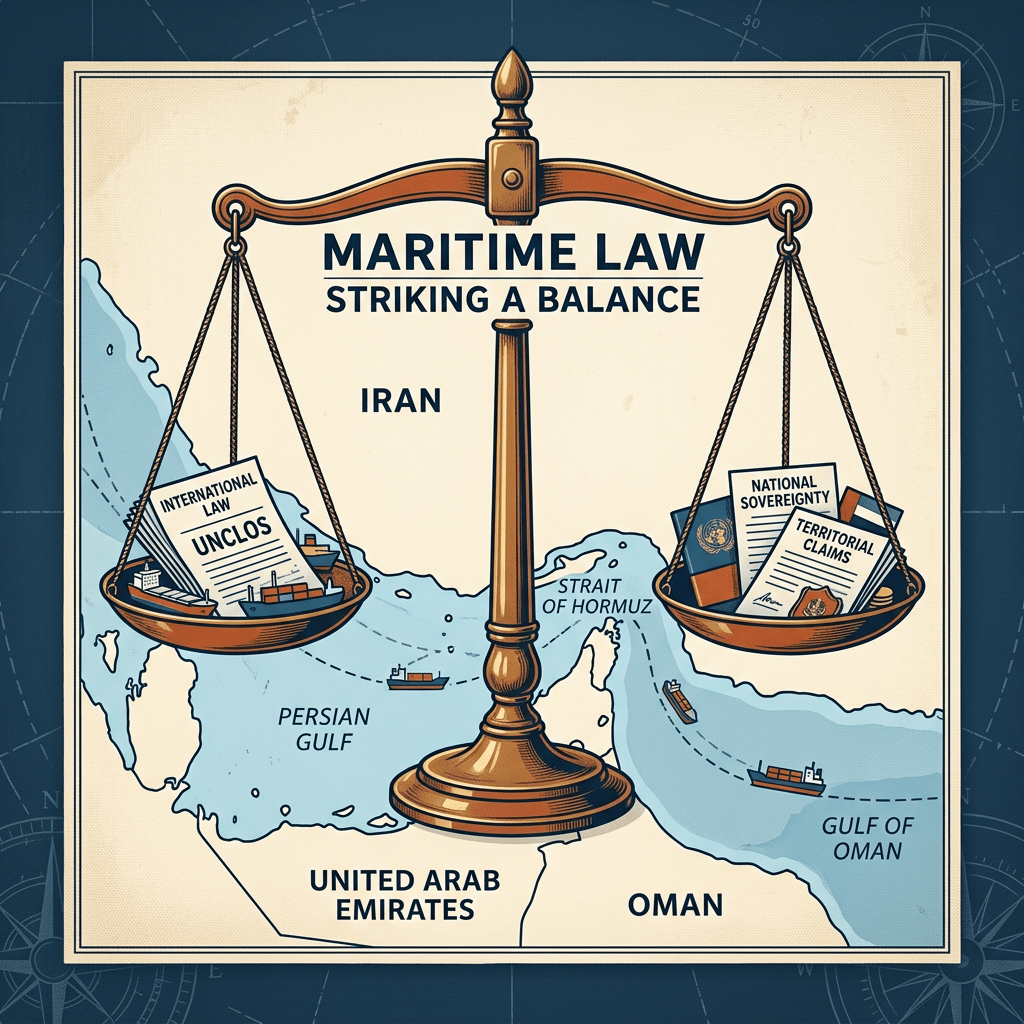
Take the current situation involving Iran.
Most people understandably focus on the military side of things: missiles, politics, oil prices and headlines about escalation in the Middle East. But underneath all of that is a huge legal issue centred around one narrow stretch of water: the Strait of Hormuz.
And honestly, it’s one of the clearest examples of how law, trade and geopolitics all collide in real life.
Why everyone suddenly cares about one shipping route
The Strait of Hormuz sits between Iran and Oman. It’s not particularly large, but it carries an enormous amount of the world’s oil and gas shipments every day.
So whenever tensions rise involving Iran, shipping companies, insurers, governments and traders all start paying attention immediately.
Why?
Because if that route becomes unsafe — or worse, restricted — the effects spread everywhere:
- fuel prices rise,
- shipping costs increase,
- supply chains slow down,
- and global markets start reacting almost instantly.
What I find interesting is that this isn’t just a military issue. It’s also a legal one.
So where does maritime law come into this?
At the centre of the debate is a basic question:
Who has the legal right to control or restrict passage through the Strait?
Under international maritime law, ships generally have the right to move through important international waterways freely. The idea is simple: global trade depends on open shipping routes.
But Iran argues that parts of the Strait pass through its territorial waters, meaning it has security rights there — especially during periods of conflict.
And that’s where things get complicated.
Because suddenly you have:
- international law saying shipping routes should stay open,
- and a sovereign state saying national security comes first.
That tension is what makes this such a fascinating legal issue.
It gets even more complicated during conflict
Once military tensions increase, the legal questions become much more serious.
Can a country restrict access to an international strait during conflict?
Can foreign naval forces escort commercial ships?
Can tankers be stopped and searched?
What happens to neutral ships that aren’t connected to the conflict at all?
These aren’t just theoretical law-school questions anymore. They’re happening in real time.
And this is where maritime law overlaps with the law of armed conflict, which basically governs naval warfare and the treatment of civilian vessels during conflict.
Shipping reacts quickly when risk increases
One thing working in logistics teaches you very quickly is that shipping companies hate uncertainty.
The moment risk levels rise:
- insurers increase premiums,
- routes get reassessed,
- operators delay sailings,
- and contingency plans suddenly become very real.
A conflict near a major shipping lane doesn’t stay “regional” for long. It spreads through the global economy surprisingly fast.
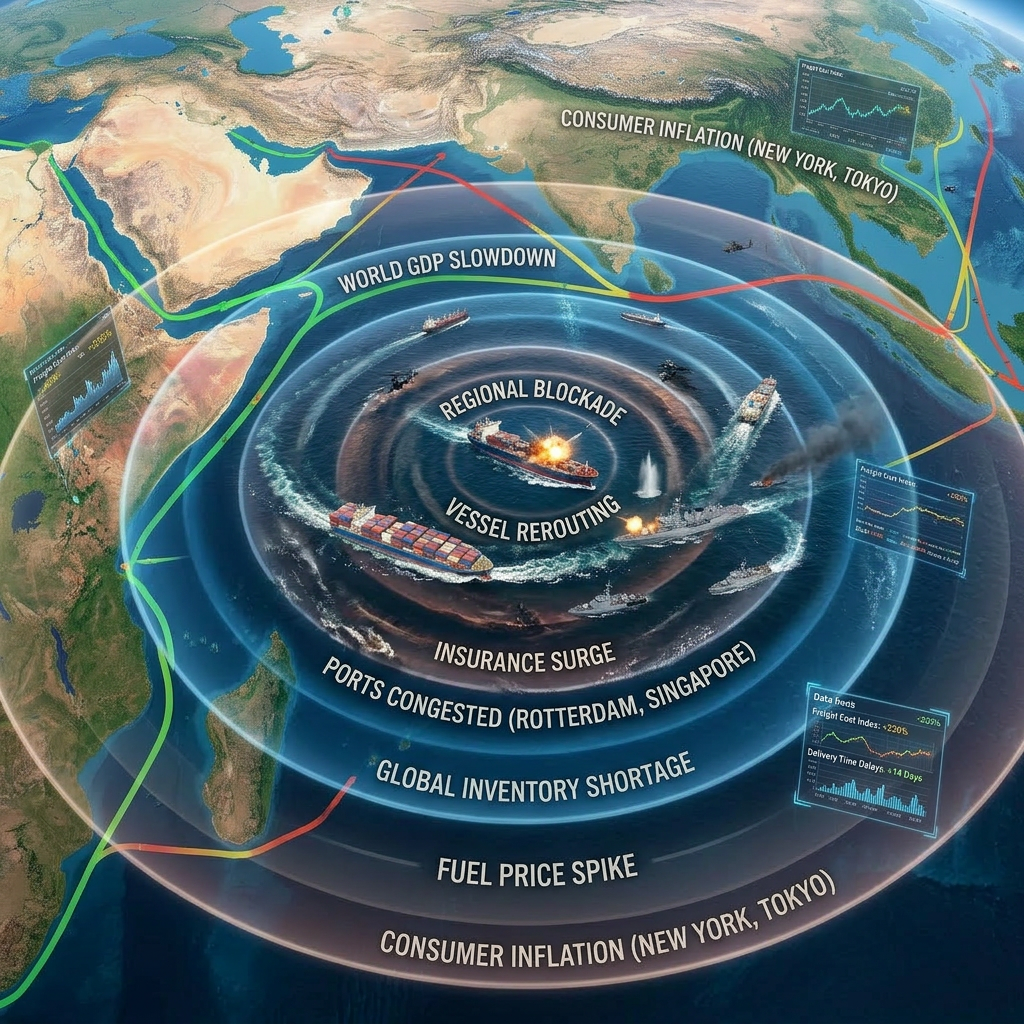
That’s the part people sometimes miss.
A delayed tanker somewhere near the Gulf can eventually affect:
- supermarket prices,
- fuel costs,
- airline tickets,
- manufacturing delays,
- and energy bills on the other side of the world.
Everything is connected.
Law feels a lot more real when you see it happening live
One thing I’ve enjoyed most since starting my law degree is realising that law is not just statutes and cases sitting quietly in textbooks.
It’s active. It moves with the world.
You start seeing legal principles playing out everywhere:
- in politics,
- in business,
- in shipping,
- in conflict,
- and even in the movement of goods across oceans.
The Iran situation is a perfect example of that.
Questions about freedom of navigation, sovereignty and international law are no longer abstract academic concepts. They’re affecting real commercial decisions every day.
Final thoughts…
The more I study law, the more I realise how interconnected everything is.
A geopolitical conflict becomes a shipping issue.
A shipping issue becomes a trade issue.
A trade issue becomes a legal issue.
And somewhere in the middle of all that are ordinary people simply trying to keep businesses running, families supported, and economies functioning.
That’s why I find this area so interesting. Maritime law might sound niche at first, but in reality, it sits at the centre of how the modern world operates.
And sometimes a narrow stretch of water thousands of miles away can affect almost everyone without them even realising it.
Keep the faith and seek justice — Manuel


Leave a Reply