“Silence does not answer every question the court must decide.”
If the other side ignores your claim completely, do you automatically get everything you asked for?
It is a tempting assumption. Most of us picture litigation as a contest, so it feels natural that if one side simply fails to turn up, the other side wins, and wins in full. A construction judgment handed down this week shows why that is only half right.
In Mulalley & Co Ltd v STO Ltd [2026] EWHC 2681 (TCC), decided on 20 October, Mr Justice Constable gave the claimant judgment against a defendant that had taken no part in the proceedings at all. But he did not give judgment for the sum claimed. Instead, he ordered that the amount be assessed at a further hearing.[1]
For an aspiring barrister, that distinction is worth understanding properly. Getting judgment and establishing how much you can recover can be two separate stages.
The principle: judgment without trial is not judgment without thought
Part 12 of the Civil Procedure Rules sets out the default judgment regime. Default judgment is “judgment without trial” where a defendant has failed to file an acknowledgment of service or a defence.[2] If the time for responding has expired, the claimant can ask the court to enter judgment without the case ever reaching trial.
But the rules have always recognised that judgment and quantum are not the same thing. Where a claim is not for a specified sum, default judgment is entered “for an amount to be decided by the court”, and the court then gives directions for deciding it.[2] Liability is settled by the default. The figure may still need evidence.
The facts: a cladding dispute, an insolvent supplier and a German parent
The background is a story many construction lawyers will recognise from the years since Grenfell.
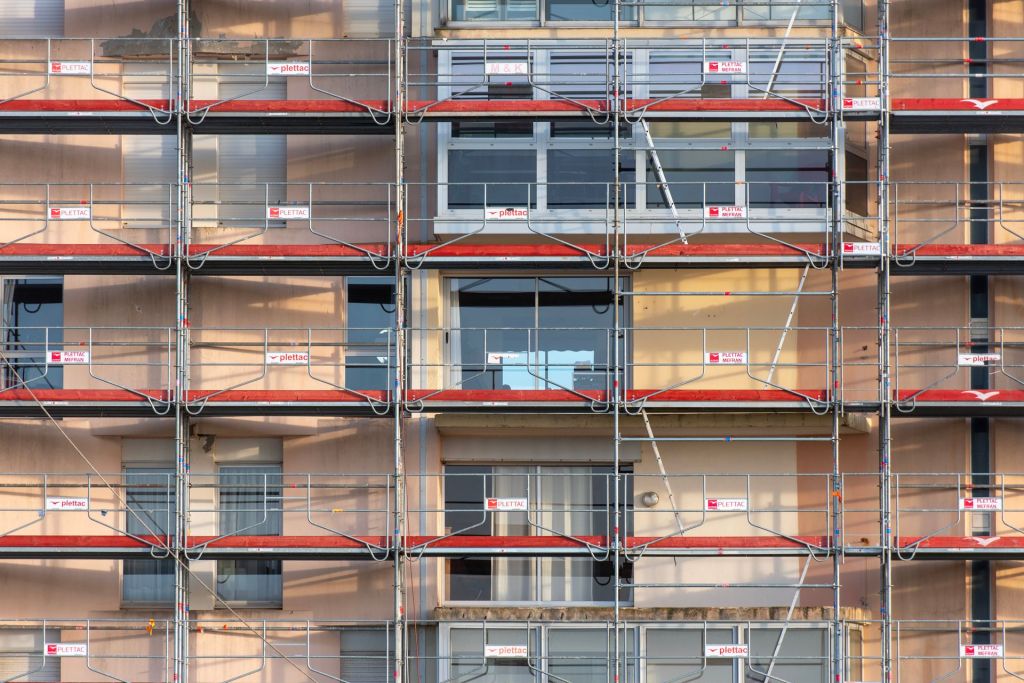
In 2005, Mulalley, a design and build contractor, overclad residential tower blocks owned by Martlet Homes. The system used combustible expanded polystyrene insulation and an organic render, supplied and specified by Sto’s UK company. In 2022, the Technology and Construction Court found that the system did not comply with the Building Regulations’ requirement on external fire spread, and Mulalley was ordered to pay Martlet £10,799,982.33 in damages, interest and costs.[1]
Mulalley then sought a contribution from the supplier, Sto UK, under the Civil Liability (Contribution) Act 1978, relying on its liability under section 149 of the Building Safety Act 2022.
Then came the twist. In January 2025, Sto UK entered administration, and the claim against it was frozen by the statutory moratorium. So Mulalley turned to the parent company, Sto SE & Co KGaA in Germany, and sought a building liability order under section 130 of the 2022 Act. That provision allows the court to make an associated company jointly and severally liable for another company’s building safety liabilities, where it is just and equitable to do so.[3]
Sto Germany was served in January 2026. It filed no acknowledgment of service. It served no defence. It did not attend the hearing.
The nuance: a fixed sum is not the same as a fixed contribution
Mulalley’s primary case was that it should have default judgment for a specified amount: in effect, a contribution covering the whole of the sum it had been ordered to pay Martlet. Its alternative was judgment with the amount to be assessed.
The judge accepted the alternative, and the heart of his reasoning is at paragraphs 29 to 32.
He drew a clear line between two figures. The sum Mulalley was ordered to pay Martlet is “fixed and identifiable: it is a specified amount.” But the contribution Mulalley can recover from Sto UK is something different. Under section 2(1) of the 1978 Act, it is “such amount as the Court finds just and equitable”, having regard to Sto UK’s responsibility for the damage.[1][4] Knowing the size of the loss does not tell you what share of it the other party should bear.
The judge also stressed that the court looks at the substance of a claim, not just whether the pleading puts a number on it. Writing a figure into the particulars of claim does not turn an evaluative question into a specified sum.
And there was a second evaluative question on top of the first. Whether to make a building liability order against Sto Germany at all depends on whether it is just and equitable to extend Sto UK’s liability to its parent. That is “ordinarily an evaluative judgment”, and it does not follow automatically from the parent’s silence.[1]
So, at paragraph 30, the judge said that even if the claim had been for a specified amount, “it does not follow that the Court should enter judgment in that amount and make the BLO sought.”[1] Because Mulalley had applied to a judge, rather than simply filing a request with the court office, the court had room to decide what the overriding objective required. It entered judgment, with Sto UK’s contribution to be assessed at a hearing after 1 December 2026, and directed Mulalley to provide disclosure and witness evidence.[1]
Interestingly, this is not the first time the point has arisen between these parties. In an earlier, related claim, Waksman J entered default judgment against Sto Germany for damages to be assessed, and Pepperall J later assessed the just and equitable contribution at 87.5%.[1] Constable J followed the same path.
The takeaway: prepare for the remedy, even when nobody is opposing you
The lesson I take from Mulalley is a practical one. When an opponent does not participate, it is easy to think the hard work is over. But default resolves only what the default can resolve. Here, it answered whether Sto Germany would defend the claim. It did not answer what a just and equitable contribution would be, or whether it was just and equitable to make the parent pay.
Those questions still needed evidence, a legal basis and a judge’s evaluation. A claimant who arrives with only a pleaded figure has not done all of the work.
That seems to me a good discipline for any advocate. Before asking a judge for an order, I need to know exactly which issues have been resolved, which still require proof, and why. An empty seat on the other side of the courtroom does not shorten that list.
If I had 75 seconds
I have been practising turning cases like this into short spoken summaries, the sort of thing you might be asked to give at a pupillage interview. This is my version:
If a company ignores a construction claim, do you automatically get the full amount you asked for?
A judgment handed down on the twentieth of October shows why that assumption can be wrong.
In Mulalley v STO, a contractor sought a contribution after a defective cladding dispute. When the UK supplier went into administration, the contractor sought a building liability order against its German parent. The parent did not acknowledge service or defend the claim.
But the court still had to distinguish the sum the contractor had been ordered to pay from the contribution it could recover. That contribution, and whether the parent should bear it, both turned on what was just and equitable.
So the court entered judgment, with the amount of the contribution to be assessed.
For me, as an aspiring barrister, the lesson is practical. An unanswered claim does not remove the need to understand the remedy. Before asking for an order, I need to know which issues the default has resolved, and which still need evidence and evaluation.
A reflection
I find there is something reassuring in this case. The court did not treat Sto Germany’s silence as a blank cheque. Even against a party that had chosen not to engage, the judge insisted on getting the answer right rather than simply getting an answer. Justice is not only about who turns up. It is about what is fair to everyone, including those who are absent.
Keep the faith and seek justice — Manuel
- Mulalley & Co Ltd v STO Ltd and STO SE & Co KGaA [2026] EWHC 2681 (TCC), especially paragraphs 29 to 32: https://caselaw.nationalarchives.gov.uk/ewhc/tcc/2026/2681
- Civil Procedure Rules, Part 12 (Default Judgment), especially rules 12.1, 12.3, 12.5 and 12.8: https://www.justice.gov.uk/courts/procedure-rules/civil/rules/part12
- Building Safety Act 2022, section 130: https://www.legislation.gov.uk/ukpga/2022/30/section/130
- Civil Liability (Contribution) Act 1978, section 2: https://www.legislation.gov.uk/ukpga/1978/47/section/2


Leave a Reply